
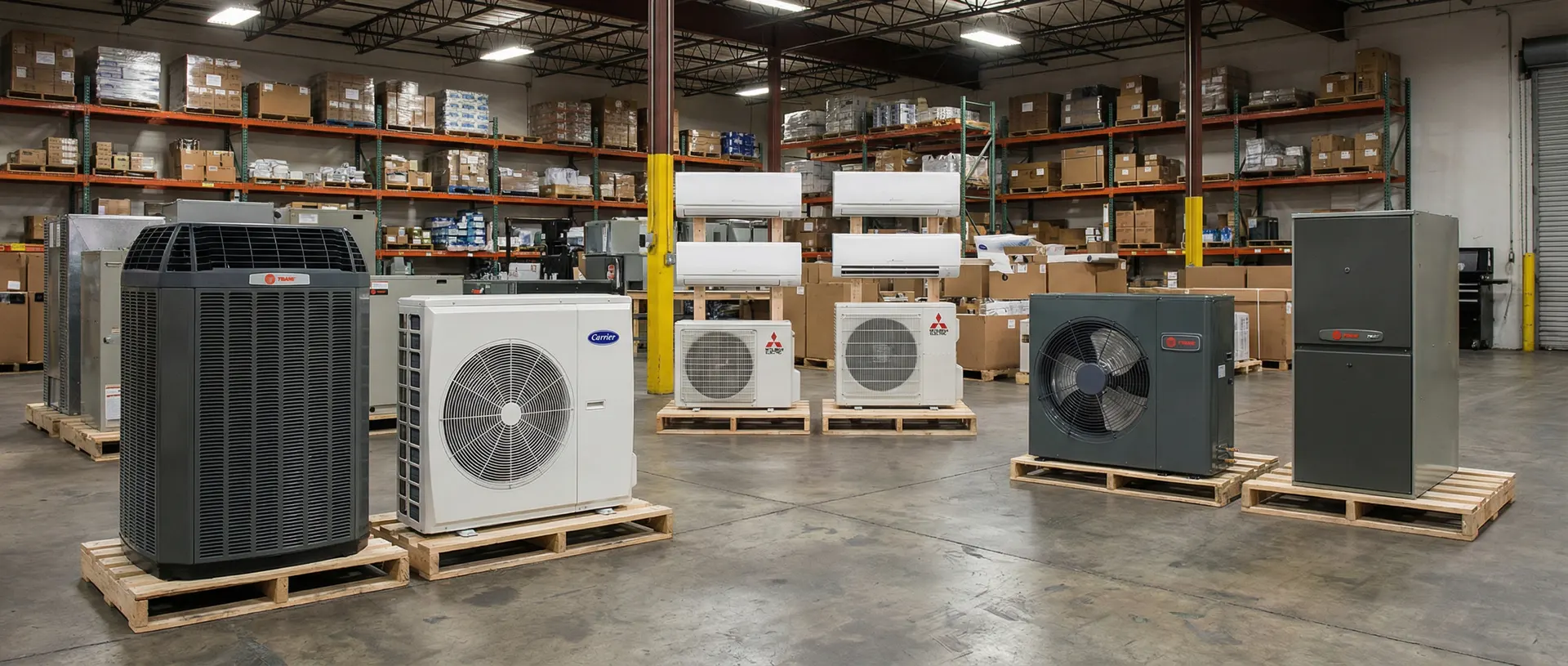
Is Your HVAC System Too Old? When to Repair vs. Replace (By Age)
Your AC is 18 years old and needs a $1,200 repair. Do you fix it or replace it? Here's a data-driven framework for making the right call every time.
24/7 Emergency Service • Same-day appointments • Free estimates on installations
# Is Your HVAC System Too Old? When to Repair vs. Replace (By Age)
"My AC is 15 years old and needs a new compressor. Should I repair it or just replace the whole thing?"
We get this question almost daily. And while there's no single right answer, we've developed a framework based on thousands of service calls that takes the guesswork out of this decision.
## Average HVAC Equipment Lifespan
| Equipment | Average Lifespan | With Excellent Maintenance | |---|---|---| | Central Air Conditioner | 15-20 years | 20-25 years | | Gas Furnace | 15-25 years | 25-30 years | | Heat Pump | 12-17 years | 17-20 years | | Ductless Mini-Split | 15-20 years | 20+ years | | Air Handler | 15-20 years | 20-25 years | | Thermostat | 10-15 years | 15+ years |
Important: These are averages. A well-maintained Trane or Carrier system in the Bay Area's mild climate can easily exceed these numbers. A neglected system in a dusty environment might fail at 10 years.
## The Repair-or-Replace Decision Matrix
### Under 8 Years Old: Almost Always Repair
Equipment this young should still have years of life. Most major components (compressors, heat exchangers) have manufacturer warranties of 5-10 years. Even expensive repairs are usually worthwhile.
**Exception**: If you've already had 3+ repairs in the past 2 years on a system under 8 years old, you may have a "lemon." Consider whether the manufacturer warranty covers replacement.
### 8-12 Years Old: Lean Toward Repair (with exceptions)
Your system is in middle age. Routine repairs under $800 are almost always worth it. For major repairs ($1,500+), use the cost calculation below.
**Key question**: Has the system been well-maintained? Systems that received annual professional maintenance at this age are usually good candidates for repair. Systems that never had maintenance may have accumulated hidden damage.
### 12-17 Years Old: Case-by-Case Decision
This is the gray zone where most homeowners struggle. Your system is past peak efficiency but might have years left. Here's how to decide:
**Repair if:** - Total repair cost is under $1,500 - This is the first major repair - System has been regularly maintained - Energy bills haven't noticeably increased - You're planning to sell the home soon (buyers expect working HVAC)
**Replace if:** - Repair costs exceed $2,000 - This is the second major repair this year - System uses R-22 refrigerant (fully phased out—recharges are extremely expensive) - Energy bills have climbed 25%+ over the past few years - You plan to stay in the home 5+ more years
### 17+ Years Old: Lean Toward Replacement
At this age, even if a specific repair fixes today's problem, other components are likely near end-of-life too. Investing $1,500 in a compressor today might be followed by a $900 blower motor failure next year and a $600 control board the year after.
**Repair if:** - It's a simple, inexpensive fix (capacitor, contactor, thermostat) - You need to buy time (a few months) while planning replacement - The system is a premium brand known for longevity (Trane XL, Carrier Infinity) and has been meticulously maintained
**Replace if:** - Any repair exceeding $800 - System uses R-22 refrigerant - Multiple components showing wear
## The $5,000 Rule (Updated for 2026)
Here's a simple calculation we use with our customers:
**Age of equipment × Cost of repair = Decision number**
- If the result is **under $5,000**: Repair is reasonable - If the result is **over $5,000**: Replace is the better investment
### Examples:
| Equipment Age | Repair Cost | Calculation | Decision | |---|---|---|---| | 8 years | $400 | $3,200 | Repair ✓ | | 12 years | $350 | $4,200 | Repair ✓ | | 14 years | $400 | $5,600 | Consider replacing | | 16 years | $1,200 | $19,200 | Replace ✓ | | 20 years | $300 | $6,000 | Replace (age alone) |
This rule isn't perfect—it's a starting point. A $400 repair on a 14-year-old system might still be worthwhile if it's a simple fix and the system is otherwise healthy.
## The R-22 Refrigerant Factor
If your AC or heat pump uses R-22 (Freon), this changes everything. R-22 production was banned in the US in 2020, and remaining supplies are expensive:
- R-22 recharge: **$150-300 per pound** (a typical system holds 6-12 pounds) - A full recharge can cost **$1,000-3,000+** - And it's just a band-aid—the leak will return
**Our recommendation**: If your R-22 system needs refrigerant, it's almost always time to replace. New systems use R-410A or R-454B refrigerant, which is readily available and affordable.
How to check: Look at the label on your outdoor condenser unit. It will list the refrigerant type (R-22, R-410A, etc.).
## Efficiency Gains: What New Equipment Saves
The efficiency difference between a 15-year-old system and a new one is dramatic:
| Old System (15+ years) | New System | Annual Savings | |---|---|---| | 10 SEER AC | 16 SEER2 AC | $300-500/year | | 10 SEER AC | 20 SEER mini-split | $450-700/year | | 80% furnace | 96% condensing furnace | $200-400/year | | 8 HSPF heat pump | 12 HSPF heat pump | $350-550/year |
Over 15 years, these savings add up to $4,500-10,500—often covering a significant portion of the replacement cost.
## Warning Signs Your System Is Failing
Even if your system is running, watch for these deterioration indicators:
### Performance Red Flags - Takes longer to reach set temperature - Can't maintain temperature on hot/cold days - Some rooms are always too hot or cold - System runs constantly without cycling off
### Cost Red Flags - Energy bills climbing year over year (adjusted for rate increases) - Repair frequency increasing (2+ calls per year) - Repair costs escalating (each fix costs more)
### Physical Red Flags - Unusual noises (grinding, banging, squealing) - Visible rust or corrosion on components - Excess moisture or water around the unit - Unusual smells during operation - Dust increase despite filter changes
### The "Cascade Failure" Pattern We often see this with aging systems: one component failure stresses others, leading to a cascade of breakdowns. If you've had 2 different components fail within 6 months, the system is telling you it's done.
## What to Do Right Now
1. **Check your system's age**: Find the installation date on the unit label, in your records, or on the unit's serial number (we can decode this for you) 2. **Review your repair history**: If you don't have records, your HVAC company should 3. **Check your refrigerant type**: R-22 systems should be replaced proactively 4. **Schedule a professional assessment**: We provide honest evaluations—if your system has years left, we'll tell you 5. **Start budgeting**: If your system is 12+ years old, start setting aside $200-300/month for eventual replacement
## The Honest Answer
We make money both ways—whether we repair your system or sell you a new one. That's why we can give you honest advice:
- **A $300 repair on a 12-year-old system?** Fix it. You'll likely get 5+ more years. - **A $2,000 compressor on an 18-year-old AC?** Replace it. That money is better invested in new equipment. - **Something in between?** Let's talk. We'll evaluate your specific system and give you our professional opinion—no pressure.
Schedule a free assessment and we'll help you make the right decision for your home and budget.
Tags:
About Trane, Carrier & Mitsubishi HVAC Services
Our team of certified HVAC professionals shares expert advice to help homeowners maintain comfort and efficiency in their homes.
Related Articles
HVAC Replacement Cost Guide: What to Expect in the Bay Area
Planning an HVAC replacement? Here's what Bay Area homeowners can expect to pay for new heating and cooling equipment.
buying-guidesHow Much Does HVAC Replacement Cost in the Bay Area? (2026 Guide)
Bay Area HVAC replacement costs are higher than the national average due to labor rates, permits, and seismic requirements. Here's what you should actually budget in 2026.
troubleshooting8 Warning Signs Your HVAC System Needs Repair
Catching HVAC problems early saves money and prevents uncomfortable breakdowns. Watch for these warning signs that service is needed.
Need HVAC Help?
Our expert technicians are ready to help with all your heating and cooling needs.
Call (650) 540-7205Book ServiceHVAC Maintenance Checklist
Keep your system running efficiently with our seasonal maintenance checklist. Covers filters, coils, drainage, and more.
- Spring & fall tune-up steps
- Filter replacement schedule
- Warning signs to watch for